Kevin Essington

  • Civic consultants: supporting nonprofits like creatives?

    Earlier this month, I helped organize 20 local civic consultants to gather at Providence Public Library to meet and discuss shared insights.  It was a surprising delight to see the diversity of backgrounds, expertise, and business types represented. These smart, dedicated people are working on improving educational outcomes, environmental policy, local business viability, healthy neighborhoods, and so much more. 

    I realize now how civic consultants, who focus on supporting nonprofit organizations and public agencies, are such a useful part of the nonprofit organization ecosystem. By offering short-term services for specific needs which would be inefficient to have full-time within an organization, consultants are keeping costs down while ensuring better functionality.

    Zac Hill and Ben Marshall, write in this month’s Stanford Social Innovation Review piece, “When Nonprofit Leaders Should Think Like Creatives” that nonprofits might consider staffing models other than “institutional.” They mention how “the arts and design industry consists of 77% freelancers,” and how that sector has used a project-based staffing model for decades, to good effect. They find three opportunities in this approach:

    1. A more flexible talent model,
    2. Work on more discrete time horizons, and
    3. Augmenting metrics with insights.

    Do you have a project that needs a manager for 12 months only? Need some help with complex data analysis or a systems upgrade? Need some guidance or training for your core functions? There is a civic consultant out there somewhere for you.

    In meeting these lovely people, I observed what should have been obvious to me: these people have deep experiences in their field. Each person had at least two decades in government, grantmaking, political advocacy, community organizing, data analysis and visualization, and more! They were very focused on the needs of their clients, delivering results, and ensuring their clients were satisfied with the deliverables.

    I have worked in small and large teams of dedicated staff for decades, and I count many of these people as inspirations, mentors, friends, and colleagues.  Building an effective team requires trust, collegiality, and a commitment to the mission, and smart staff recruitment and investment are key to that. Once that team has momentum, though, consider civic consultants as a way to overcome those peaks and valleys that nonprofit organizations face annually!
  • Happy New Year, And Special Thanks

    2025 was a difficult year for many communities, especially for cities and for our local environment. But I am grateful for the commitment that so many people are demonstrating to make their community a healthier more equitable place. Here is to 2026 where I expect our nonprofit friends to not only survive but to thrive.

  • Do you have a culture of philanthropy?

    So you’ve decided to create a culture of philanthropy. Now what? Obviously, the first step (agreeing to have a culture of philanthropy) is critical. But what does a culture of philanthropy even look like? 

    2025 saw sudden and unexpected withdrawals of critical federal funds from nonprofits of all kinds and sizes.  In response, nonprofit organizations have reviewed their revenue sources and many have concluded that they need a new or renewed commitment to private funding to fulfill their mission.

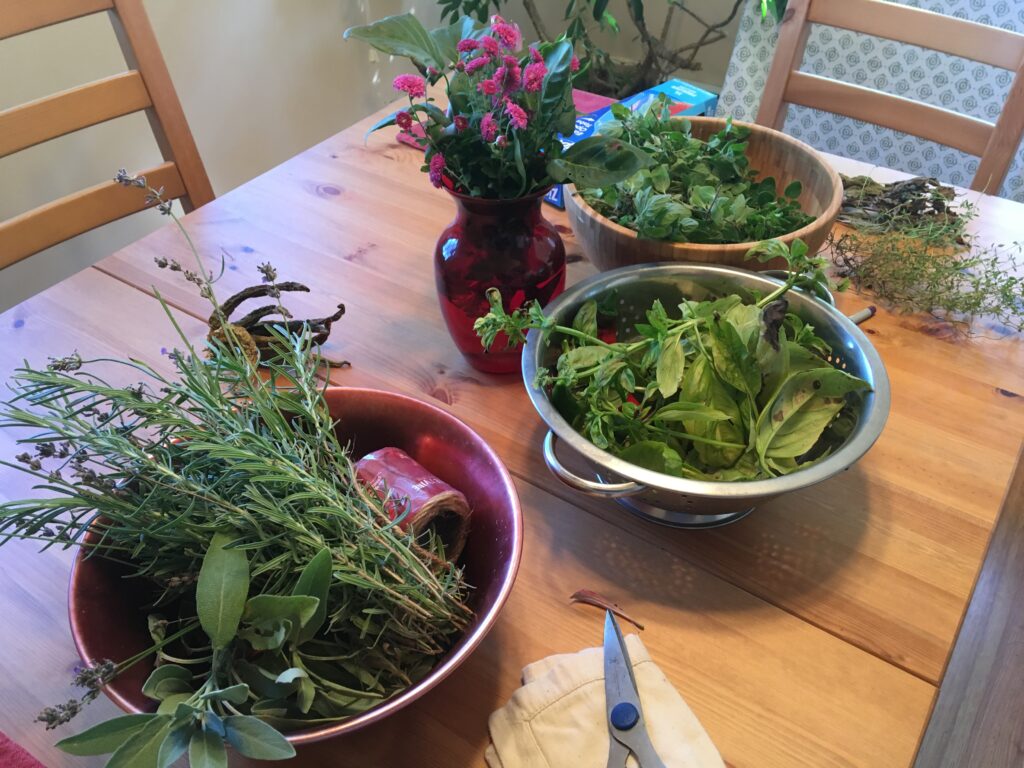
    Harvest after months of work.

    The Evelyn and Walter Haas Jr. Fund describes a culture of philanthropy as, “Generally, a culture of philanthropy is one in which everyone—board, staff and executive director—has a part to play in raising resources for the organization.” We love this! It is explicit in describing who is responsible for this culture: everyone.

    We are excited to share these Five Principles In A Culture of Philanthropy as a way to describe what success might look like at your organization. These are developed based on decades of experience in working in successful large, medium, and small nonprofits that evolved to focus on the power of private philanthropy to grow and sustain themselves.

    Financial measures are a great way to track your culture’s commitment to philanthropic revenue, but philanthropy returns can take a year or more to show up in your financial statements. These Five Principles help assess your culture now:

    1. Prioritize relationships over transactions.
    2. Put the mission first, always.
    3. Effectively communicate “Why.”
    4. Understand your skills and capabilities.
    5. Your systems track relationships.

    This sheet describes these principles a bit more. How does your organization stand? Have you committed to creating a culture of philanthropy? Do you demonstrate a commitment to these principles? Which ones? How can you improve?

  • Five Things To Know About Your Board

    The board of directors plays a critical role in the creation, growth, and stability of every organization.  But unlike for-profit corporate boards which respond strictly to financial incentives, the board of directors of a nonprofit organization must consider both finances and impact. This is the governance balancing act that boards and staff must manage. 

    There are insightful books, consulting practices, and training sessions for you and your board to access and improve your nonprofit governance. Your board may be ready to step up with fundraising, have a difficult transition to manage, or possibly even a fiscal crisis to address. These resources and more can help get you organized.

    In our consulting practice, we have worked with many nonprofits who need to get the “basics” of board governance right first. This is especially true for relatively new boards or nonprofits with less than a few years of experience. One day they will be ready for that “deep dive” but today their needs are more foundational.

    That is why we created this one-page guide: Five Things to Know About Your Nonprofit Board of Directors. In it we describe the board’s primary responsibility (governance), the role of the board chair (team leader), the form of the executive director and board chair partnership (canoers), house rules (by-laws), and meeting content (discuss, don’t tell).  If your organization and board is just getting started, follow these Five Things To Know and you will be in a great place to grow your impact even further in just a few years’ time.

    What things would you suggest for another Five Things To Know? What would you say about fundraising, or executive director management? Share your thoughts below!

  • Scenario planning is central to emergency management, insurance, and military operations. Should scenario planning be a part of your nonprofit planning cycle and minimize shocks to your nonprofit organizations?

    United States national elections often portend big shifts in multi-billion dollar spending priorities. The 2024 election means that Federal support for many community, urban, environmental, educational, and artistic pursuits is over, following several years of strong support.  Also, since 2000 United States’ society has been dealt more than election shocks such as September 11, the 2008 financial crisis, and COVID to name a few.

    Through all of this, nonprofit organizations have a mission to see to. In fact, the absence of Federal investment in social needs makes your mission even more critical than before! Your strategic approach to achieving your mission needs to stay mostly intact, even if your programs or actions update annually. But how can you stay strategic when funding and policy swings can be so severe?

    Scenario planning should be part of your annual work planning and budgeting.   Your mission is hopefully one built in response to generational issues that you are working to resolve. Your Strategic Goals are multi-year statements of how you will measure your progress against these generational challenges, and should be resilient to most disruptions. A good Strategy Flywheel, in support of outcome-oriented Strategic Goals should remain at the core of your work and should provide stability after disruptions.   But when disruptions occur, your annual work plans and budgets must respond, often quickly.  

    I recommend two ways to run a simple annual scenario exercise annually. First, consider using City Greener Strategies’ Scenario Planning Worksheet with a small team of board or staff leaders. The worksheet, at minimum, should clarify which disruptions will lead to which impacts to you and your community. It can also help you and your planning team identify which actions and measures you could add to your annual work plan. 

    Second, each small- to medium-sized nonprofit organization should plan for various budget scenarios. City Greener Strategies’ Operating Budget Scenarios should, with about 15 minutes of financial data entry, give you a sense of how your organization’s finances might perform under four different growth environments: high, medium, low, and negative. If you suspect financial headwinds next year that may help you allocate resources in the current or upcoming fiscal year.

    Lastly, many consultants have suggested some scenario planning models due to the disruptions caused by COVID-19. When you are in the midst of a disruption, I recommend using Bridgespan’s “Making Sense Of Uncertainty” article and the materials they provide there. 

    So while big shifts in opportunities and challenges can happen unpredictably and quickly, other fields have taught us in the nonprofit sector that we too can prepare for them. Please use and share these resources and drop us a line to talk more about what works for you!

  • Is your organization ready for fascism?

    By Kevin Essington, CEO, City Greener Strategies LLC

    Radical changes are coming. You were made for this. Now get organized for what is to come.

    The United States has narrowly elected a fascist and kleptocratic man and his supporters to be President until at least January 2029. The role of nongovernmental organizations under fascist regimes is a critical one in supporting the everyday needs of civil society. As public resources are redirected away from people in order to enrich private allies or preferred populations of the fascist or kleptocratic leader, public assets will degrade for many. Daily life will become more difficult for the average person.

    Your role as community and civic leader has never been more urgent and vital than it is about to become. You, your mission, and your services, are a pillar in a civic structure that has at least one less pillar.  You have never been more needed, and more important to your community. Your government is not going to restore that river, feed your hungry neighbors, or house the poor. You are!

    In this environment, transformative public funds are gone. Your funding model to meet the increased importance of your mission is changing. If you are a new organization, this may not impact you immediately, but if you are in growth or mature lifecycle stages, you may in fact lose funding and be forced to quickly adapt.

    Despite the pressure to do more with less, there are paths to growth. Many civic organizations and leaders will also find themselves serving a role beyond their mission: inspiring broader action for a fairer society. Because of your courageous commitment to your community, and because of your impact in the face of government pressure, you will give courage to others and they will remember that you did! 

    There are examples around the world and through modern history of nongovernmental organizations who successfully organized public action in the face of fascist or kleptocrat governments. For example, the Nuclear Free Philippines Coalition stopped the construction of a nuclear power plant during the dictatorship of Ferdinand Marcos. Furthermore, this campaign’s success inspired action throughout the country that led to the People Power Revolution that deposed the dictator.  In South Africa, the Institute for a Democratic Alternative organized the movement for democratic representation and helped end apartheid. In the Soviet Union, while not fascist, the All-Russian Society for the Protection of Nature made nature protection a matter of national importance despite Stalinism’s ruthlessly repressive nature.

    You and your organization were made to serve in this environment, even though the stress and pressure may feel overwhelming at times. To help you prepare for this environment, I want to offer three questions for you to consider.

    Is your business model still viable?
    Have you conducted a ruthless review of your funding? Have you built two or three financial scenarios for the next few years? Have you considered a radical rebalancing of funding and how that will affect your strategies and programs? Should you prepare to put different people to work on your programs? Should you consider entirely new labor models, such as coops, mutual-aid, or volunteer corps? Planning for all financial contingencies and imagining new ways of working won’t reduce surprises, but it will give you some guardrails to lean on as shocks occur.

    Is your culture fascist-ready?
    Have you, your staff, and your board acknowledged the environment you are now in? Are you going to accommodate the demands of the government or actively work against them? What are the risks of either? Do you have the right board and staff culture to move down the path you chose? These will be highly divisive times, building a shared culture will help you maintain morale and stay resilient.

    Have you cultivated allies or strengthened ties to people in power?
    Have you cultivated new relationships? Can you build or join a coalition that can be resilient under pressure from above? Have you made your plans clear to powerful people such as mayors, county commissioners, state reps, or even religious or labor leaders? Shifting political times may require new alliances, and you may need to rely on powerful people to protect you from powerful counterforces as well.

    We cannot know the future, nor the many events that may unfold in the coming years of fascist rule of the United States. But your organization is more important than ever to your community. Preparing for contingencies, building the right culture, and being part of coalitions will help you be resilient, adaptable, and impactful in ways you may not imagine. Be brave and bold, but be prepared!

  • Plastrik, Taylor, and Cleveland in their book “Connecting to Change the World” describe the value of networks and network-building in affecting social and environmental change. In it they suggest “Three Rules to Live By:”

    1. Trust the network,
    2. Serve the network, but don’t wait for it, and
    3. Embrace vertigo.

    In 2024 I helped launch a state-wide network of groups that are adding nature to urban sites in several small, post-industrial cities: Bloom Rhode Island. Plastrik et al.’s advice served as a touchstone for me. Access to their wisdom felt like a “life hack!”

    In building the Bloom Rhode Island Network, we recognized that “embracing vertigo” is a brave principle in striking the balance between network order and chaos. We managed that balance through a “fail fast, succeed sooner” approach (as Peter Manzo describes in his 2008 Stanford Social Innovation Review piece).  In Bloom Rhode Island’s initial year in 2024 we prioritized action over analysis. I lead a lot of strategic planning projects, and I do a bit of theory-crafting around it. That is a cerebral practice, so it was exciting to lead with action in creating Bloom Rhode Island.

    Based on our experience I would add a fourth rule to the excellent three listed above:

    4. Hypothesize and test often.

    Our actions in launching Bloom Rhode Island were designed to test a hypothesis: that urban “greening” groups could grow their capacity through participating in a network. We tested that hypothesis through grant making, building personal and professional connections between groups, and hosting a lot of discussions about capacity needs. We constantly asked questions. We did this within the “node” of this nascent network while doing the work. It required doing, learning, then thinking. 

    Here are some suggestions for using a “Hypothesize and test often” approach in building your network.

    1. State your hypothesis: Be clear about what you are testing before you build your network. Be clear about the “value add” that you think the network will create. This will, at a minimum, ensure that you do your work in a spirit of inquiry.
    2. Plan for self-assessment: Build in multiple, almost constant opportunities for feedback from the network. What is helpful to them? What is missing?
    3. Push the “null” hypothesis: Probe hard for the answer that your hypothesis is “wrong.” This will help reduce confirmation bias and help you recognize where the network does, and does not, have utility.

    If you are wondering, we found that Bloom Rhode Island did indeed add value to the network we created. Initially, we rarely mentioned to our colleagues that we were building anything. We made some grants, gave away some planting materials, guided some organizational development projects, and hosted several meetings. We talked to partners, we visited dozens of sites, and we connected groups who needed something with another group who could offer it. Now after a year, participants are, unprompted, describing their enthusiasm for this network. They are suggesting ways to grow it next year. They are asking for more opportunities to connect with each other. They are making plans to do more with their work and their projects in 2025. In short, we grew their capacity! 

    Perhaps the best measure of success for this new network is the results on the ground: 

    – 50 new urban nature projects arose in six cities, 
    – Hundreds of volunteers (including dozens of young students) contributed to their community,
    – Thousands of people are now within a ten-minute walk of a joyful new natural site, and
    – Hundreds of thousands of dollars went into the local economy.

    Networks really can drive change! Just use the three rules listed above, and consider my humble suggestion for a fourth. Check out Plastrik, Taylor, and Cleveland’s website to learn more and share your stories with me about what has worked for you.

  • Last week I was excited, and a little nervous, to present at the Land Trust Alliance’s 2024 Rally, the national land conservation conference. I have attended six Rallies, and they are professional, inspiring, and fun! I have learned so much from experienced professionals at Rally over the years, could I rise to the challenge in sharing my ideas about “Impact Cycles?”

    The 25 folks that hung around until the last of six sessions to join me had a lot of fun and a lot of insights into the value of using cycles for designing our work. I have taken Jim Collins’ brilliant “Flywheel Effect” from the Good to Great book series, and centered impact as a way to grow, build momentum, evolve, and increase your impact over time.

    I am glad to share my hand-out from the session, below. I would love to talk with you about how this might be useful for you, and how you might improve the presentation or thinking. Thanks to the great folks at the Land Trust Alliance for the opportunity to share this model, and to get some insights into it, and thanks to the folks who joined my workshop to learn and share!

    Download the “Impact Cycle” handout here.

  • Is Financial Sustainability Actually Good?

    I have worked with several nonprofit organizations to create a new strategic framework since I started my practice a year ago, and part of my work includes reviews of peer organizations’ financial information and strategic direction. I have reviewed the goals and impact of about 25 United States-based nonprofit organizations in this time, and I am struck by one goal or strategy that appears in about a third of the organizations’ goals: financial sustainability.

    Here are some examples of this:

    • Secure stable and robust funding
    • Build a sustainable and enduring organization
    • Improve the [organization] by increasing and diversifying funding

    I wonder what value there is in creating a financial sustainability goal, making it public, or in making it so vague? Unless you recently went through a multi-year period of running operating deficits without delivering impact, creating a goal that says “We will be financially sustainable” is just a throw-away line.

    Imagine if these strategic frameworks also included goals of “We will serve our community” or “We will use volunteers.” Most staff, board, or funders would wonder whether the framework was strategic at all.

    Board members and donors often believe financial “sustainability” is paramount, though, so we see it again and again. I wonder whether this helps any organization grow, evolve, or serve their mission, for several reasons.

    1) “Financial sustainability” will not inspire anyone to join you in meeting this goal, or any of your goals. Donors and policy makers support “winners” who can demonstrate impact, who get things done. Goals to essentially “survive” look tame compared to growth and evolution. Instead of “stability”, project growth in your impact.

    2) Stating “We will become stable, financially” is wishcasting. How will you do this? Financial goals like this imply the staff and board will simply run harder, faster, and longer. Instead, be specific. Are you shifting to a major donor funding model? Will you build an endowment? Build out your earned income? Launch a campaign? Be specific here, add metrics or measures, and explain why it is important.

    3) Financial strength is not a measure of impact. There are plenty of nonprofit organizations with generous endowments and boards, who have a very narrow view of their role, their mission, and who they serve. Instead of assuming that financial stability is some measure of your impact, start with your impact and model how it will generate momentum in your organization, using the Jim Collins-inspired “Impact Cycle.”

    4) Sustainability does not always have to be a goal for your organization. Which is more important, solving the problem you were created to solve, or existing forever? The community problems that we face, need urgent attention and investment now. The fixation on “perpetuity” or “sustainability” is a reflection of how so many funders and foundations operate: doling out 5% of their assets annually instead of pushing their funding out now to immediate effect. Vu Le and others write brilliantly about this showing how it leaves resources on the sidelines while communities and the planet face crises now.  Be clear about why financial sustainability is critical to achieving your mission.

    So, the next time you are creating a strategic framework for your organization and a board member or staff leader pushes for “financial sustainability,” take advantage of it! Carve out time or a small team to clarify this idea. Why is sustainability important? What would success look like? How does it fit into an “Impact Cycle” if at all? Instead of a financial sustainability goal, do you need a business, development, or campaign plan? 

    Running and growing a nonprofit organization is hard, and money helps drive impact and get more things done. So, treat it seriously in your next strategic planning process and go beyond wishcasting and dig into thoughtful business development instead!

  • Nonprofits need clear and inspiring strategic direction to motivate community, donors, staff, board, and decision makers. But what if that is not enough? What if clear outcomes, strategies, measures, and tactics move most of the team forward, but not everyone?

    Building a successful nonprofit initiative or program takes time, perseverance, optimism, and hustle. With success comes reassuring momentum and progress (see: the Flywheel or Impact Cycle). That success may not propel the entire organization, but on its own it is a great place to be. So, why get behind new directions, ideas, or goals?

    John Kotter’s “Change Management” courses and books tell a story that repeats after every organization’s strategic realignment: the story of team members who refuse to join their colleagues in pursuing new goals. These colleagues might display aggressive or passive-aggressive behavior to their colleagues, “quiet quit,” or undercut ideas to donors or board members. In short, they will defend their “turf” threatened by new directions or investments.

    Kotter studied successful change initiatives of all kinds and in all kinds of sectors. His research informed his books and now a thoughtful institute and source of knowledge at https://www.kotterinc.com/  

    Kotter’s approach is a good one, below are his often used Eight-Step Process for leading change:

    From the Kotter Institute, to learn more go to https://www.kotterinc.com/

    For nonprofits to evolve, grow, and achieve their mission, new directions are sometimes necessary even if teams or individuals refuse to adapt. How can Kotter’s model be useful? I have helped lead change management processes using Kotter’s model, and I want to suggest these nonprofit-oriented interpretations of Kotter’s Eight Steps:

    1) Create a Sense of Urgency: Assuming your organization is not in a financial crisis, lean into the challenge presented by your mission, and the need to address it, now. Unilike for-profit entities, your mission is truly who you are. Banish the scarcity mindset and demand excellence in the face of your mission.

    2)  Build a Guiding Coalition: Create a small (three to five) team of creative, questioning, knowledgeable, solution-oriented colleagues to lead the next couple of steps, especially. I recommend the Executive Director/CEO be excluded from this team and that members cede authority within the group. 

    3) Form a Strategic Vision: Led by the guiding coalition, think of this as a strategic planning process, creating TIMER (Time-bound, Inspirational, Measurable, External, and Realistic) goals and a “Flywheel Model” or “Impact Cycle.” You may want a good facilitator or strategic planning partner for this step.

    4) Enlist A Volunteer Army: Assign a “captain” to each strategy in the strategic vision. This will expand the guiding coalition by giving responsibility to people, conditioned on driving the change outlined in the vision. Then use adaptive management principles to adapt your work. This will grow the coalition even further by showing that the organization is listening and learning to feedback..

    5) Enable Action By Removing Barriers: Update your systems to reflect the new strategic vision, especially performance management. Creating and aligning performance management practices with the strategic vision will “bend the curve” towards change even among the reluctant. 

    6) Generate Short Term Wins: A good strategic vision or plan will include measures of progress that move you towards your bigger, longer-term strategic goals. When you move the needle on those measures, celebrate! Your annual report is a perfect place to reinforce these wins, internally and externally.

    7) Sustain Acceleration: Your readiness for a fundraising or “capital” campaign may vary, but this may be the perfect moment for a fundraising campaign to enter its public phase. Asking the public to help you close out (or blow out!) your fundraising goal will drive impact, growth, and change. Alternatively, this may be a good time to launch the quiet phase of your campaign, motivating key donors and staff.

    8) Institute Change: Change typically involves staff and board turnover, so to institute change for the long-term at your nonprofit, focus on succession planning and board recruitment to ensure that new colleagues and leaders align with the new culture and strategic vision.

    I hope this helps you think of how you should think of growth and evolution at your nonprofit. What have you found to be a challenge, or a help, in driving positive change, adaptation, and growth at your organization?